
Finding Success in an Age of Layoffs, AI, and Economic Uncertainty
If you have been following the news lately, you have probably seen a steady stream of headlines about corporate layoffs, government shutdowns, and the growing impact of artificial intelligence on the workforce. Major employers such as Amazon and Walmart are reducing staff, often citing efficiency or automation as the reason. At the same time, uncertainty in the public sector is disrupting consulting contracts, funding, and long-term planning. For consultants, this can feel like the perfect storm: economic instability on one side and technological transformation on the other.
It is easy to view these changes as threats, but that perspective misses a crucial truth. The consulting industry does not collapse in periods of uncertainty; it adapts and often grows stronger because of them. We witnessed this most recently during the global pandemic, which many termed the “pandemic boom,” occurring between late 2020 and mid-2022. When the landscape shifts, organizations need clarity more than ever. They still need people who can analyze problems, design a strategy, and bring structure to unpredictable conditions. That is what consultants do best. The key is learning how to position your business so that it becomes essential rather than expendable during these times.
The Myth of Recession Equals Ruin
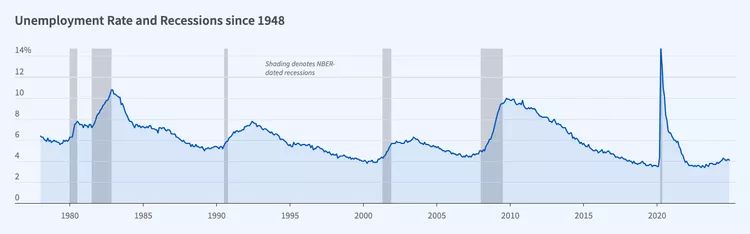
Recessions are not new. (An overview of “U.S. Recessions Throughout History: Causes and Effects” can be found at https://www.investopedia.com/articles/economics/08/past-recessions.asp) Economic cycles rise and fall, and yet each downturn produces a wave of new opportunities. History shows that many successful consulting practices were built in the middle of uncertainty. The reason is simple: when the economy contracts, inefficiencies become visible. Companies and institutions start to notice where processes break down, where systems no longer serve them, and where old assumptions no longer hold. Consultants who can help solve those problems are not only valuable; they become necessary.
“In times of recession, there are massive opportunities and fortunes to be made.”
– Richard Branson
Richard Branson once said, “In times of recession, there are massive opportunities and fortunes to be made.” That statement remains true, but the context has evolved. The current economic climate is not just about reduced spending or tightened budgets. It is also about the structural transformation of industries as artificial intelligence and automation redefine how work gets done. This shift is changing the consulting world itself. Firms are becoming leaner and more technology-driven, relying on software and machine learning to handle research, data analysis, and repetitive tasks.
1. Reevaluate Your Offer Through a Survival-to-Sustainability Lens
In uncertain times, the way you position your services determines whether clients view you as optional or essential. Many consultants are still selling outcomes that sound aspirational but fail to address what clients care about most right now: stability and resilience. When budgets are tight, decision-makers are not investing in “nice-to-have” initiatives. They are investing in what protects their organizations from risk and prepares them for what comes next.
Take time to reexamine your core offer. Ask yourself a few critical questions:
- Does this service help my clients reduce financial risk or operational inefficiency?
- Can I demonstrate how my work leads to predictable results that sustain performance over time?
- How does my expertise address the real pressures of today, such as digital transformation, workforce reduction, or the need for flexible systems?
This is the foundation of what I call Engineered Sustainability. It means designing solutions that support both peace and profit. In other words, your work should create calm through structure and confidence through results. Whether you specialize in leadership development, operations, communications, or organizational strategy, your message should connect to the human and financial needs that arise during instability.
Instead of scaling through volume, focus on depth. Become the consultant whose work strengthens the client’s foundation, not just their momentum.
2. Redefine Value Through the Integration of Human and Digital Intelligence
Consulting today looks very different than it did even five years ago. Artificial intelligence is changing how firms operate and how clients expect results to be delivered. Tasks that once required junior analysts or extensive hours of manual work are now handled by automation. This shift does not eliminate the role of consultants; it simply redefines it.
Your value is not in collecting information or even analyzing data. It is in interpreting it. AI can identify patterns, but it cannot understand the cultural, emotional, or political nuances that shape decisions. That is where you come in.
To remain relevant, learn to integrate technology into your process rather than compete with it. Use AI tools to streamline your research, improve client reporting, and organize complex data, but continue to lead with empathy, insight, and ethical judgment. The consultants who thrive in this environment are those who can move fluidly between the analytical and the human.
This balanced approach, what I refer to as Digital + Human Intelligence, ensures that your work remains both efficient and irreplaceable. The future of consulting belongs to those who merge innovation with discernment, using technology as an amplifier for human expertise rather than a replacement for it.
3. Market for Relevance Instead of Volume
When instability rises, attention becomes harder to earn and easier to lose. Many consultants respond by increasing their marketing output, posting more often, or chasing visibility on every platform. That approach leads to exhaustion and noise. In an unpredictable economy, relevance matters more than reach.
To stay relevant, shift your marketing focus from promotion to positioning. Instead of asking, “How can I get more eyes on my work?” ask, “How can I make my work impossible to ignore for the right audience?” Clients today are skeptical of vague promises and bold claims. They are looking for advisors who demonstrate understanding and authority through substance specific to their unique needs.
Start by anchoring your content around frameworks and insights, not beautiful branding and flashy pitches. Share how you approach problem-solving, what patterns you see emerging in your field, and what lessons your clients can learn from current shifts in the market. Speak directly to the fears and priorities of your audience: cost containment, adaptability, and sustainability.
John Quelch and Katherine Jocz wrote about the importance of understanding recession psychology and the psychological segmentation that occurs in downturns, explaining that people change their buying habits based on how they feel about the economy, not just what they can afford.
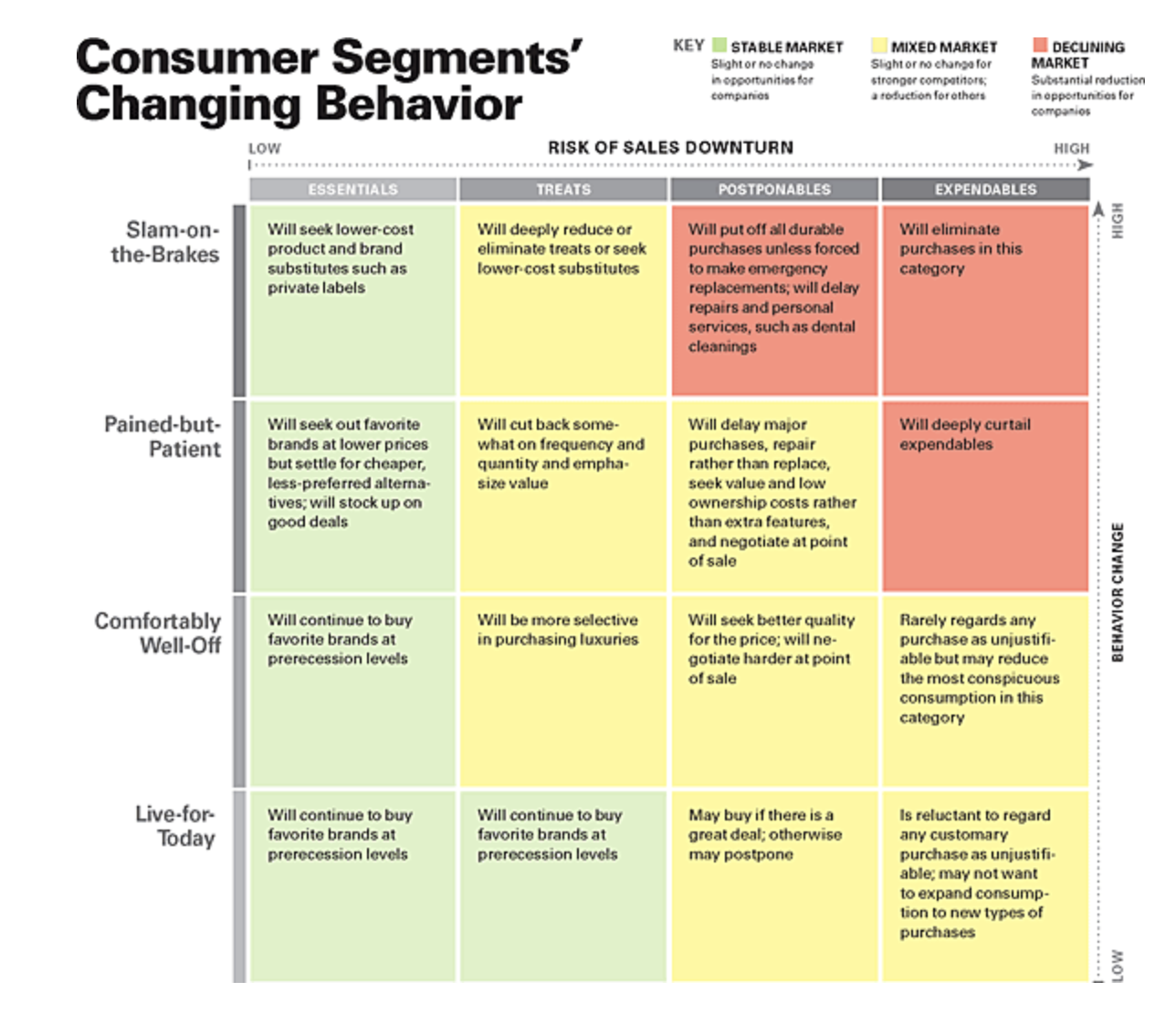
Source: “How to Market in a Downturn” by John Quelch and Katherine Jocz, appearing in the April 2009 issue of Harvard Business Review.
Keep that in mind as you refine your messaging. Your potential clients are not only making logical decisions; they are managing anxiety and uncertainty. This is true whether you work consumer-to-consumer, business-to-business, or in the corporate or enterprise space. Your tone should convey calm confidence and your brand should embody clarity over chaos. Marketing with intention helps you build trust faster and attract clients who value strategic thinking over short-term tactics.
4. Prove Your Return on Investment with Precision
In prosperous times, many consultants can get away with vague outcomes and qualitative wins. In lean times, that no longer works. Clients expect measurable proof that their investment is paying off. They need to justify every expenditure to boards, investors, or leadership teams.
This is why your ability to measure and communicate ROI is essential. Develop a process for capturing both tangible and intangible results. Tangible outcomes might include cost savings, revenue growth, or efficiency gains. Intangible results might include increased confidence, improved decision-making, or stronger team alignment. Both matter, and together they tell a story of transformation.
Build feedback loops into your engagements. Track metrics from the start, report progress regularly, and tie results back to the goals you defined in your proposal. When you can present data that supports your impact, you not only validate your work but also position yourself as a long-term partner rather than a one-time contractor. ROI is more than a number; it is evidence of trust and competence. In uncertain times, that is what retains clients and drives referrals.
5. Engineer Your Authority for Longevity
Being excellent at your craft is not enough. In a crowded and noisy market, consultants must be known for something specific. This is where Strategic Authority comes in. Authority is attained not by accident; it is built intentionally through clarity, consistency, and credibility.
Start by defining your “niche of one.” This is the unique combination of your expertise, lived experience, and professional perspective that no one else can replicate. Then codify that expertise into intellectual property: frameworks, models, or methods that make your thinking visible and teachable. These become the backbone of your brand and the reason clients seek you out.
Finally, communicate your authority consistently. That does not mean constant self-promotion. It means showing up with purpose, sharing ideas that advance the conversation, and creating visibility through thought leadership, case studies, and meaningful dialogue. Over time, these actions compound. The more your audience associates you with clarity and reliability, the more your authority grows.
Authority is not a personality trait. It is the product of structured intention and consistent demonstration of value.
The Bottom Line
We cannot control when governments shut down or when corporations decide to reduce staff. We cannot stop technological evolution or economic cycles. What we can control is how we respond to these realities as consultants.
This moment in history calls for a new kind of consulting business—one built on sustainability, clarity, and human intelligence. The economy will continue to shift, and technology will continue to advance, but the need for trusted advisors who bring discernment, empathy, and structure will remain constant.
Your goal is not just to survive the storm but to design a business that grows stronger because of it. Be the consultant who creates calm in chaos, who leads with confidence rather than fear, and who helps clients find stability in uncertainty. That is how you future-proof your consulting business in a world that never stops changing.